

How Cold Weather Affects Ford Tire Pressure and What to Do About It
Why Cold Weather and Ford Tire Pressure Don't Always Get Along
If you've ever walked out to your Ford on a cold morning and noticed the tire pressure warning light glowing on your dashboard, you're not alone. Ford tire pressure cold weather changes are one of the most common - and most misunderstood - seasonal issues drivers face. The good news is that it's usually a straightforward fix once you understand what's happening.
The Science Behind Tire Pressure Drops in Cold Temperatures
Air contracts when temperatures drop. For every 10-degree Fahrenheit decrease in outside temperature, your tires can lose roughly one pound per square inch of pressure. That might not sound like much, but if temperatures swing 30 or 40 degrees overnight - which is very common in Pataskala, OH during fall and winter - your tires could be significantly underinflated by morning. Ford vehicles, like all modern passenger cars and trucks, are sensitive to these changes because proper tire inflation directly affects handling, braking, and fuel efficiency.
What the Ford TPMS Light Is Telling You
The Ford TPMS light - which stands for Tire Pressure Monitoring System - is designed to alert you when one or more tires fall below the recommended pressure threshold. It typically illuminates as a yellow horseshoe-shaped symbol with an exclamation point. Seeing this light in cold weather doesn't always mean you have a leak. More often, the pressure simply dropped due to the temperature change. However, you should never ignore the Ford TPMS light. Driving on underinflated tires can cause uneven wear, reduced traction, and in serious cases, a blowout.
How to Check and Correct Ford Tire Pressure in Cold Weather
The best practice for managing Ford tire pressure cold weather situations is to check your tire pressure manually using a quality gauge before driving in the morning, when tires are still cold. Your recommended tire pressure is listed on a sticker inside the driver's door jamb - not on the tire sidewall, which shows the maximum pressure. Add air as needed using a compressor at home or at a service station. Once you've inflated all four tires to the correct specification, the Ford TPMS light should turn off on its own after you've driven a short distance. If the light stays on, one of the tires may still be low, or there could be a sensor issue worth having inspected.
Tips for Keeping Tire Pressure Stable Through the Winter Months
Staying ahead of tire pressure changes during cold months doesn't have to be a hassle. Check your tire pressure at least once a month and always after a significant temperature drop. Nitrogen inflation - available at many service centers - is less affected by temperature swings than regular air, though the difference is modest. If your Ford is equipped with a direct TPMS system, the Ford TPMS readout in your instrument cluster can even show you the pressure in each individual tire, making it easy to spot the problem before you head out. Keeping a portable tire inflator in your vehicle during winter is also a smart move.
Visit Us for a Tire Pressure Check or TPMS Service
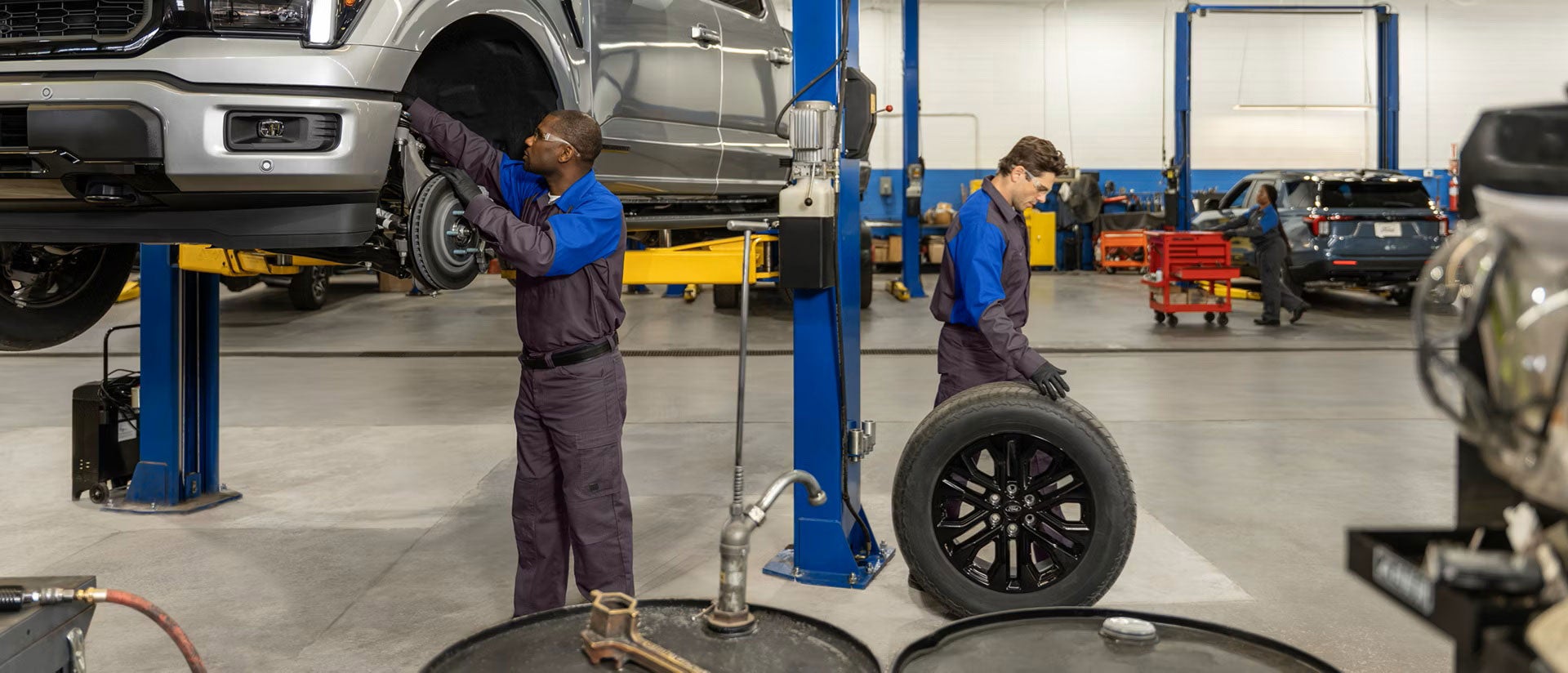
If you're unsure about your Ford tire pressure cold weather situation, or if your TPMS light won't reset after inflating your tires, it may be time to have a certified technician take a closer look. A sensor might need recalibration, or there could be a slow leak that isn't immediately obvious. Staying on top of tire pressure is one of the simplest ways to protect your investment and keep your Ford performing the way it was built to.
Stop by or schedule an appointment online, our team at Coughlin Ford of Pataskala is ready to help you drive safely all season long.