
Coughlin Ford of Pataskala

Blog / Columbus Ford Service

6 Signs Your Ford Needs an Alternator Repairs

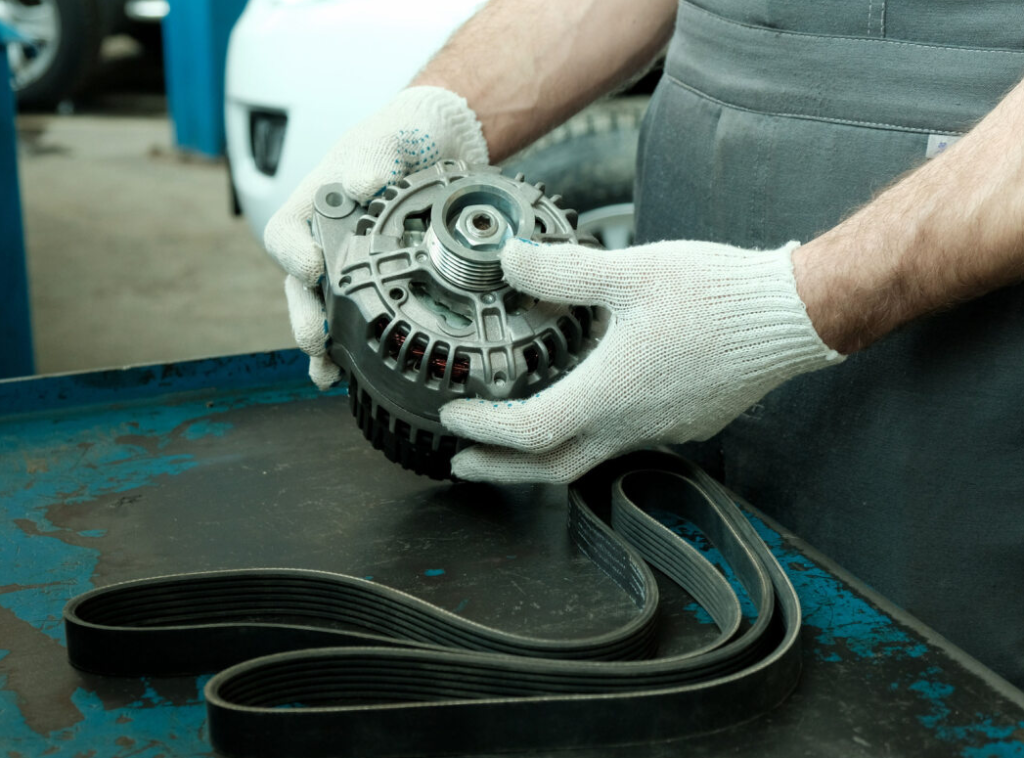
An auto repair technician holding a vehicle alternator.

In your car, while the battery supplies electricity to the engine starter, ignition coils, headlights, and other electrical components, the alternator is responsible for keeping the battery fully charged up at all times. Whenever you're driving, the alternator continuously converts the engine's mechanical power into electricity to charge the battery. So if you're experiencing any of the following electrical problems, you might need prompt alternator repairs at your local Ford dealership. 

Your Battery Has Died

When a car battery dies, it might have grown too old. Alternatively, you might have left the headlights or stereo on overnight, which drained the battery. Another potential cause is a faulty alternator.

If a bad alternator failed to recharge the battery during your last drive, the battery might not have enough power for the starter. When you jumpstart your car, if the engine keeps running, then your alternator is still generating electricity and is probably okay. However, if the engine dies again quickly after the jumpstart, you may need a new alternator. 

Your Headlights Brighten and Fade Erratically

When an alternator begins to falter, the power it supplies becomes erratic. This can cause the headlights and other external and internal lights to suddenly grow brighter and dimmer, or even flicker. 

Your Electrical Accessories Slow Down

When an alternator fault restricts the supply of electricity, various electrical components in your car will slow down and start failing. This might include the dashboard dials, stereo, heated seats, phone charger, power windows, air-con, infotainment screen, and more. 

You Hear Whining Sounds 

Sometimes an alternator fault is caused by the serpentine belt slipping loose or breaking. The serpentine belt transmits power from the engine's crankshaft to the alternator and various other car parts. If your serpentine belt begins to slip out of place, you might hear an odd whining noise and smell burning rubber.

Your Dashboard Warning Lights Appear

When a bad battery or alternator restricts the flow of voltage, a battery warning light will usually come to life on the dashboard. In some models, you'll see a battery-shaped light, and in others, you'll see a more specific ALT light that points directly to the alternator as the faulty part.

A Technician at Your Ford Dealership Finds an Fault

While inspecting your vehicle during regular maintenance checks, the technicians at your local dealership may well detect alternator problems before you do. They can then nip the problem in the bud by fixing or replacing the alternator, saving you from the risk of sudden alternator-related vehicle failure on the road. 

Have your alternator repaired or replaced today at Coughlin Ford of Pataskala in Pataskala, OH. We're a friendly local dealership providing an extensive range of new and used cars along with award-winning customer care. 
Posted in:

Related Posts

Spring Maintenance

Spring Ford Maintenance in Pataskala, OH - Stay Road Ready

Spring is the ideal time to give your Ford the care it deserves. By prioritizing spring Ford maintenance in Pataskala, OH, you can ensure your vehicle is ready for the road ahead. From oil changes to brake inspections, following a seasonal maintenance schedule keeps your car running smoothly and safely. Don’t wait— schedule your service today and enjoy worry-free driving all season long! Why Spring Maintenance Matters As the chill of winter fades and spring blooms in Pataskala, OH, it’s the perfect time to focus on your vehicle’s upkeep. Spring Ford maintenance is essential to ensure your car, truck, or SUV is ready to handle the changing weather and road conditions. By following a seasonal maintenance schedule, you can keep your Ford running smoothly and avoid unexpected issues down the road. more Spring maintenance is more than just a seasonal chore—it’s a proactive step to protect your investment. Winter driving conditions can take a toll on your vehicle, from salt buildup to tire wear. Addressing these issues as part of your spring Ford maintenance routine ensures your car is in top shape for the warmer months ahead. Key areas to focus on include: Inspecting and replacing wiper blades worn down by winter ice and snow. Checking tire pressure and tread depth, as fluctuating temperatures can affect both. Cleaning the undercarriage to remove road salt that can lead to rust. For drivers in Pataskala, OH, these steps are particularly important given the region’s variable winter weather. Essential Steps in Your Seasonal Maintenance Schedule A well-planned seasonal maintenance schedule is crucial for keeping your Ford reliable year-round. Here are some essential tasks to include in your spring checklist: Oil and Filter Change: Fresh oil ensures your engine runs efficiently, while a clean filter helps maintain proper airflow. Battery Check: Cold weather can drain battery life, so testing it in spring helps avoid unexpected breakdowns. Brake Inspection: Ensure your brakes are responsive and free of winter wear and tear. Fluid Levels: Check and top off fluids like coolant, transmission fluid, and windshield washer fluid. By adhering to these steps, you can extend the life of your vehicle and enjoy peace of mind on the road. The Role of Technology in Modern Maintenance Ford vehicles are equipped with advanced technology designed to make maintenance easier than ever. Features like Ford Co-Pilot360® and the FordPass® app help you stay on top of your vehicle’s needs. For instance: Use the FordPass® app to schedule service appointments or track maintenance history. Rely on Ford Co-Pilot360® alerts for tire pressure or fluid level warnings. These tools are invaluable for busy drivers in Pataskala, OH, who want to keep their vehicles in peak condition without added stress. Schedule Ford Maintenance in Pataskala, OH Today Ready to get started on your spring Ford maintenance in Pataskala, OH? Visit Coughlin Ford of Pataskala today to schedule your service appointment. Our expert technicians are here to help you follow a seasonal maintenance schedule tailored to your vehicle’s needs.

Asian,Auto,Mechanic,Holding,Digital,Tablet,Checking,Car,In,Garage.

Maintaining Your Ford Emission System: Service Guidelines

The emissions system converts dangerous combustion gases like hydrogen sulfide and carbon monoxide into less harmful ones like sulfur dioxide and carbon dioxide. This conversion is essential to reduce airborne pollution. This system is designed to operate at high temperatures and under intense pressure, but it still needs regular maintenance. As your Ford dealership, we want you to know some signs you need to visit us for Ford emission system maintenance. Rattling Noises The catalytic converter is the center of the emissions system, and its interior has a honeycomb-like structure. The honeycomb design provides a large surface area to convert engine gases. While the converter operates at high temperatures, it can still overheat due to age or damage. If this happens, the intense heat will crack sections of the honeycomb. If the honeycomb cracks, continued high temperatures will extend the cracks, and pieces will break off. This damage to the converter will increase vehicle emissions and produce rattling noises as the broken honeycomb sections move around as you drive. We'll investigate the converter to confirm the problem. The honeycomb can't be repaired, but we'll install a new converter to fix this problem. more Black Exhaust Smoke Black exhaust smoke can be a sign that your converter is damaged. Normal exhaust smoke is wispy and almost invisible, and shows the converter is working efficiently. If the exhaust smoke turns black, unburnt fuel is being dumped into the exhaust from the engine cylinders. Hot, unburnt fuel can't be completely broken down by the catalytic converter, so it passes out the tailpipe in a black cloud. The unburnt fuel raises the temperature inside the converter, which can cause the catalytic converter to overheat and suffer serious damage. Our technicians will check the converter and repair or replace it. We'll also investigate the reason fuel isn't burning correctly and fix that issue. Blue-Tinged Converter The converter, as we've seen, is part of the exhaust system. It's a large, roundish component with sections of the exhaust connected to both ends. It's designed to operate at temperatures from 800°F to 1,200°F. Despite its sturdy design and heat resistance, it can be damaged by extreme temperatures. If the converter gets too hot, meaning its internal temperature rises above 2,000°F, the outside of the converter changes color. If you look under your Ford and the converter has a blue tinge, it's overheating and not converting exhaust gases correctly. Exhaust emissions will increase, and you'll smell gas from the tailpipe. We'll replace the overheated converter, and vehicle emissions will return to safe levels. If you have an emissions problem, contact our service department right away at Coughlin Ford of Pataskala in Pataskala, OH.

Oil Change in Pataskala, OH

Ford Oil Change Intervals: Keeping Your Engine Healthy

When was the last time you changed your oil? If you can't remember, it's probably a good idea to check its level and condition. Nothing threatens the smooth functioning and lifespan of an engine as much as low or degraded oil, which is necessary to lubricate the many moving parts, combat corrosion, and keep the whole system clean. To optimize your car's health and longevity, here's how to figure out the perfect Ford oil change intervals. Ford Oil Change Intervals: Keeping Your Engine Healthy for Longer Follow Your Owner's Manual and Warranty Always read the oil-change guidelines in your owner's manual and follow them diligently. And if your car's under warranty, it's also wise to be aware of what the warranty stipulates in order to prevent it from voiding. If for some reason these two instructed oil-change intervals vary, err on the side of caution and follow the more frequent one. Remember that you can never have too many oil changes, but too few can lead to considerable wear and tear inside the engine. more Twice a Year Is a Good Rule of Thumb Modern synthetic motor oil tends to stay in great shape for 7,500 to 10,000 miles. This means the majority of drivers need to change their oil twice a year to avoid problems. If you drive more than the average distance of just over 14,000 miles yearly, have your oil changed three or four times per year instead. Consider How Much Strain You Put on Your Oil There are other reasons why some drivers require more frequent oil changes. If you put your engine and oil under excessive strain, it will wear down faster. One way to do this is regular short trips of under five miles, which doesn't give the oil time to properly warm up to optimal lubricating temperature. Increasing the strain with heavy loads or trailers also causes the oil to degrade faster. The environment you drive in can make a difference too; if you regularly use off-road trails or rough roads with plenty of dust, dirt, and sand, your oil will thicken more rapidly. Heavy traffic, steep mountainous routes, and aggressive driving habits can also take their toll on motor oil. Ask Our Technicians for Personalized Guidance For peace of mind, you can ask one of our experienced technicians to figure out the ideal oil change interval for you and your car. We can then set up a routine schedule that includes polite reminders to ensure you never forget to change your oil on time. Visit Coughlin Ford of Pataskala in Pataskala, OH, today to arrange a convenient oil-change schedule. We're a local award-winning dealership dedicated to providing top-notch cars, deals, financing, maintenance, and customer care.