
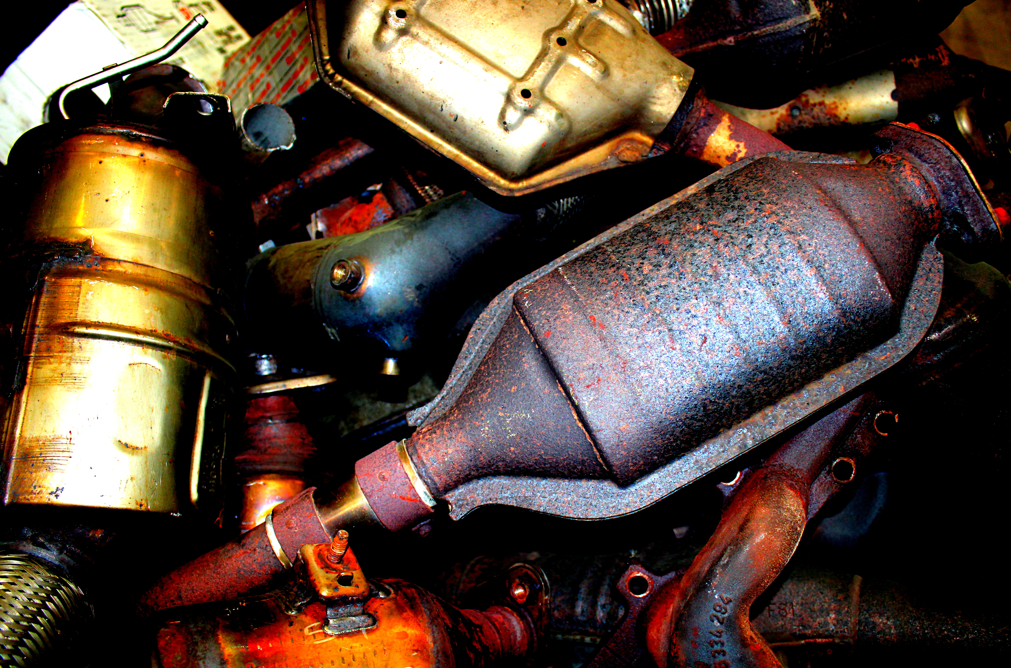
The combustion process produces dangerous chemicals like carbon monoxide, which increase air pollution. Your Ford’s catalytic converter converts these toxic chemicals into harmless ones, reducing pollution by up to 99%. A converter can wear out or become damaged, and your car’s emissions will rise. Your Ford dealer can repair or replace the converter for you, and these are some signs the converter is failing.
Thick Black Smoke
Black exhaust smoke is a highly visible sign of a problem, as it means the converter isn’t working. The smoke has a foul, acrid smell due to the presence of unconverted combustion byproducts. There are several reasons for a converter failure. The most common causes are the converter has failed due to age or damage due to another engine problem.
A converter has a long life of approximately ten years, after which it will gradually wear out. Engine problems like a high fuel-to-air ratio can lead to converter damage. A fuel-rich engine reduces combustion efficiency and prevents much of the fuel from igniting. Hot, unburnt fuel is dumped into the converter, which can overheat the converter and cause it to fail. We’ll examine your converter and repair or replace it.
Your Engine Starts Then Dies
When your engine starts, the combustion process begins. If your engine fails within seconds of starting, you could have a blocked converter. The fuel-air mixture in the cylinders is compressed, then ignited to create combustion. Once the cylinder contents have ignited, the waste products and gases enter the converter for conversion.
Carbon buildup in the converter can block the exit from the converter into the exhaust system. If this happens, the combustion gases flow back into the engine and raise its internal pressure. Increasing gas pressure in the engine chokes off combustion and your engine will die. We can easily fix this problem by removing the converter and clearing the blockage before we reinstall it.
Rattling Noises
A converter uses heat, high pressure, and chemical reactions to convert engine gases. The inside of a converter is shaped like a honeycomb, as this design provides the largest surface area possible for quick and efficient gas conversion. A honeycomb is strong, but any damage to the structure can cause cracks.
Heat and high pressure in the converter will cause cracks to expand, and honeycomb pieces can break off. Broken honeycomb pieces will move around in the converter, producing a rattling sound as they do so. Our technicians will examine your converter and replace it if it’s damaged.
A damaged converter increases toxic emissions and will lead to engine damage. Call us today at Coughlin Ford of Pataskala, and we’ll fix the problem for you.
Connect with us


Recent Blog Entries
- Ford Super Duty Towing Capacity: What Pataskala, OH Drivers Should Know
- Ford Escape vs. Edge: Which Crossover Fits Pataskala, OH Drivers Best?
- How to Prepare Your Ford for a Road Trip
- 2026 Ford Explorer Trim Levels Guide: Which One Is Right for You?
- 2026 Ford Explorer vs Ford Expedition: Which SUV Fits Your Family Best?